
Chickens, I don't know what it is about these little dinosaurs in the yard that makes homesteaders hearts sing, but they're pretty awesome, aren't they?

There's something to be said about the satisfaction of being able to go straight out into your yard to gather your breakfast.
And chickens are pretty easy to care for, and a great beginning homestead animal, especially for small spaces.
And while we typically leave our eggs, unwashed, out on the counter until we eat their delicious, yellow yolks.
It doesn't always work out that way.
Sometimes, there is mud. Sometimes we sell the eggs and people don't care for the extras that come with farm fresh eggs. And so, they get washed.
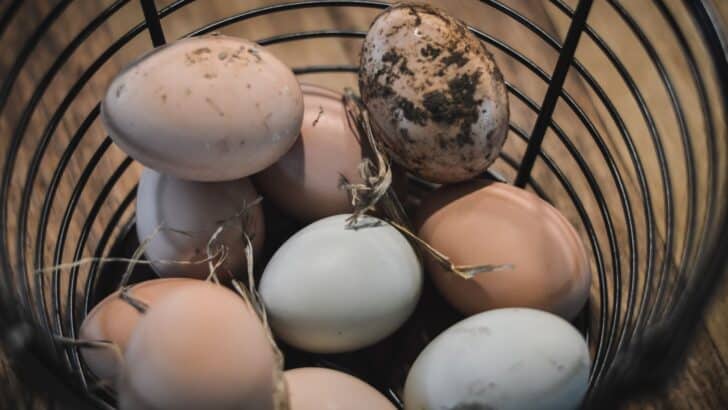
Eggs are naturally resistant to bacteria when they are laid. There is an awesome, bacteria-resistant layer called the bloom. And that layer keeps all the nasties out of your eggs. As long as they are unwashed.
Whether they're refrigerated or not.
In fact, the United States is one of the only countries that refrigerates eggs, or even washes them for that matter.
But, that's another story, for another day.
So, what do we do with the icky, gross eggs caked with mud, poo, or other unwanted grossness that we don't care to serve for breakfast?
Prevent The Eggs From Getting Dirty
I know... it's not always possible. I mean, most of us have a mud farm at least 4 months out of the year. And no matter how hard we try, they get disgusting quick. And my ducks? They seem to love to forgo the coop altogether and lay their eggs outside in one of their many little mud holes. But, I digress.
Sometimes, eggs just get gross. But here are some tips to keep them from getting too dirty.
- Freshen the bedding in the nesting boxes frequently. A quick daily spruce of nesting boxes goes a long way.
- Do not place nesting boxes near roosting areas. The closer they are, the more poo that will accumulate.
- Do not place nesting boxes near the coop door. A short walk through bedding will keep the chickens from tracking the mud into the box.
- Collect eggs frequently. We aim for twice a day.
- Place nesting boxes lower than roosting areas. This will discourage them from roosting on the nesting boxes.
How to Wash Farm Fresh Eggs
Note: eggs that are washed no longer have the protective bloom, they have to be refrigerated.
Wash without water
This method should leave the bloom intact. However, I opt to refrigerate these eggs, just in case. Note that this method will only work for lightly soiled eggs.
Grab a scrubby sponge, we like to use these scrubby sponges. And gently remove the poop and mud from the egg in a circular motion. This works great for smaller amounts of dried mud and poo.
Wash with water
Sometimes, there's just too much mud and goop on the eggs to scrub them with a sponge. In that case, you'll need to use water. You only need water. You do not need bleach or vinegar or anything else. Just warm water.
These eggs will have to be refrigerated as the washing will remove the bloom.
Do not use cold water to wash eggs. It creates a vacuum and will actually force bacteria inside the egg. Nobody wants that. Just warm up the tap and let's get to it.
I just turn the tap on warm, grab my scrubby sponge from the windowsill and get to washing. It only takes a few seconds to gently remove the goop from the egg. Some people put warm water in a bowl and get the eggs wet, then wash. I dunno, I guess I don't like extra dishes for two second egg soaks.
Once you've removed the yuck from your dirty eggs, grab a towel and dry it. Throw it in a carton and put it in the fridge. We eat the washed eggs first. Because they don't stay fresh near as long.




Leave a Reply