
Preserved lemons are known for their intense citrus flavor and unique texture. Preserved in salt, this helps to draw out their juices and turn the fruit into a soft, tangy condiment that can be used in a variety of dishes.

Popular in Mediterranean and Middle Eastern cooking, they're not a well-known condiment here. However, probably the most notable use for preserved lemons is in North Africa, specifically Moroccan cuisine like chicken tagine that calls for them.
Their flavor of salt-preserved lemons is much more mellow, but intense than a fresh lemon. The bitter pith is not so bitter, and they're soft making them the perfect addition to many dishes.
While this ferment didn't hit the states until probably the 1970s, if you don't care to make your own you may be able to find a jar of preserved lemons. You can try looking at specialty grocery stores or even an olive bar. But, they're very easy to make right at home without traveling and spending a lot to purchase them.
Are pickled lemons the same as preserved?
Preserved lemons are sort of pickled lemons. Fresh lemons are packed in a salty brine and allowed to sit and ferment. The acidic brine makes them "pickled."
However, the fermentation process works much in the same way as other ferments like sauerkraut and fermented hot sauce, by using salt to preserve the lemons. So, some may say they're not technically pickled though the acidic lemon juice technically makes them a pickle.
What do salt-preserved lemons taste like?

While fresh lemons have a slightly sour, bitter flavor to them, preserved lemons are much more mellow. They have a unique flavor that is fruity, but not sweet and has a tangy, umami element to it. This makes them an excellent addition to many dishes.
All that said, unlike many other fermented foods, preserved lemons are not made to be eaten alone, rather they are utilized for their unique flavor in a variety of dishes.
What type of lemons are best for preserving?
Any variety of lemon can be preserved. You could even mix and match some bitter lemons with more sweet varieties if you would like to in the same jar.
However, since you'll be using the whole lemon, including the peel I do recommend using organic lemons. These will not be sprayed or have wax on them. If for some reason the only option you have is regular lemons, just be sure to wash and scrub them well before using them, they'll be fine.
Thin-skinned lemons like Meyer lemons are very popular for preserving, but thicker-skinned lemons like Eureka lemons will work as well.
Depending on the size of the lemons you're using, you may have to quarter them completely instead of only slicing them partially through, to fit them in the jar. If that's the case, don't worry, it won't affect the flavor or fermenting process.
Ingredients for Preserved Lemons

Organic Lemons - again, any variety will work, but Meyer lemons are often preferred because of their flavor and thin skin.
Pickling Salt - while you don't want to use regular table salt, pickling salt, kosher salt, or even sea salt will work for this recipe.
Lemon Juice - you may or may not need to add a little lemon juice to the jar to help the brine. You can use bottled lemon juice or lemon juice from more fresh lemons if you have another use for them such as candied lemon peels or dehydrated lemon powder.
How to Make Preserved Lemons
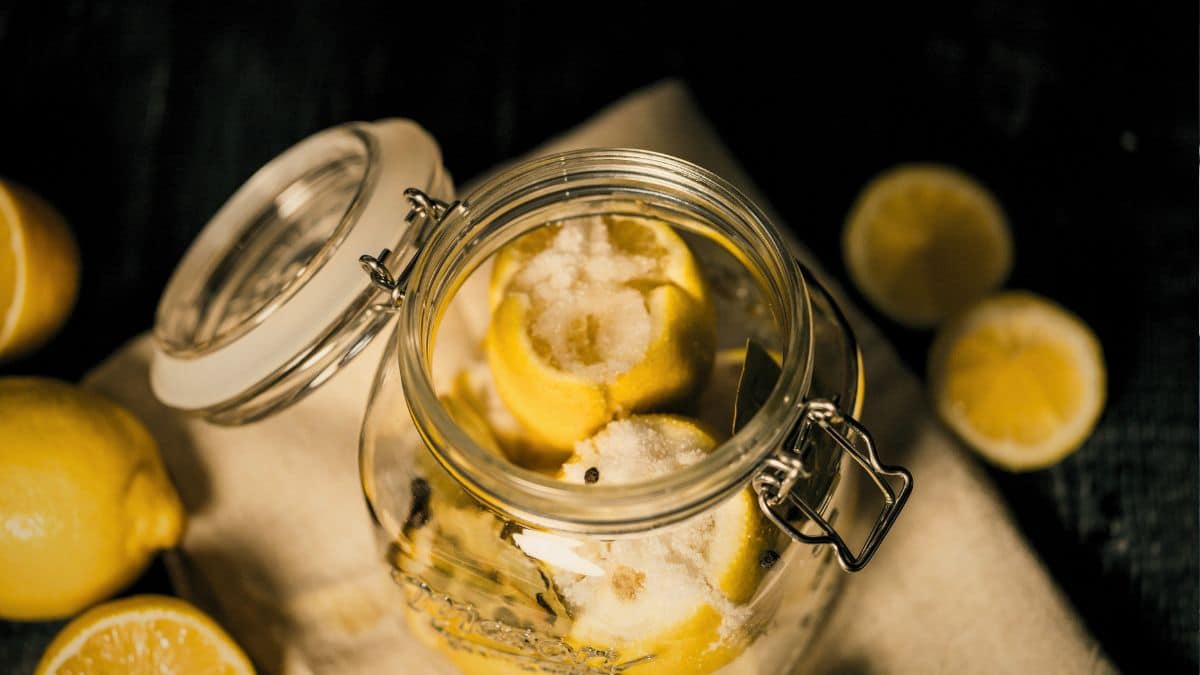
While it takes three weeks to make your own preserved lemons, the process is incredibly simple and only requires a few steps to make them. This step-by-step tutorial will have you making this delicious condiment in no time.
Scrub. Run the fruit under tap water and scrub gently. If the fruit has wax on it, you'll have to pour boiling water over it first then run them under cool water and scrub them clean.
Prep. Prepare the whole lemon by cutting ¼" of each end off of the fruit. Place the lemon on a cutting board and cut lengthwise into quarters, keeping the bottom ¼" to ½" connected at the base of the fruit.
Salt. Sprinkle a tablespoon of salt in the bottom of a quart jar. Then, sprinkle salt generously over the sliced lemons, making sure to get plenty of salt both inside and outside on the lemons.
Put the first whole lemon in the bottom of the jar, pushing firmly to release all of the juices. Then, one at a time, add the remaining lemons, pushing firmly with each addition to release all of their own juices.
The salted lemons should be completely covered with lemon juice, if they aren't, top the glass jar off with fresh lemon juice making sure the fresh lemons are completely submerged.
If you notice the lemons trying to float above the surface, using a fermentation weight can help keep them submerged.
Pour an additional two tablespoons of pickling salt in the top of the jar. Cover the jar tightly with a lid.
Wait. Leave the lemons at room temperature, turning the mason jar upside down about once per day to make sure they stay covered with water, for approximately 3 days. Then, place the jar in the refrigerator for an additional 3 weeks, turning it over occasionally.
Store and use. Once preserved, you can simply remove a lemon from the jar when you need one, and rinse it well to remove some of the excess salt. While many people recommend only using the peels and discarding the flesh, the lemon flesh can also be used if desired along with the pickling liquid in the jar.
They can be stored in the refrigerator for up to 6 months.
Variations for Salt-Preserved Lemons
While traditionally whole lemons are preserved in salt with a little additional lemon juice some people incorporate optional spices such as a cinnamon stick, bay leaf, black peppercorns, or even red pepper flakes.
I just preserve the lemons, but you can add some flair to them by putting a few cinnamon sticks, bay leaves, black peppercorns, or some red pepper flakes in the jar with them while they're fermenting. Use your imagination and test out some different flavors if that's your jam.
Preserved Lemon Recipes

If a recipe calls for fresh lemons, preserved lemons are a great substitute for fresh fruit. However, if you're looking for some ideas, here are just a few:
- Try them in a preserved lemon lemonade
- Preserved lemon tuna salad
- Top some toast with a drizzle of olive oil and some minced preserved lemon for a delicious treat
- Use them to brighten salad dressings like this preserved lemon salad dressing
- Use them to season pasta
- Season sheet pan salmon with them
- Make preserved lemon butter
- Try preserved lemon leg of lamb
- Garnish a cocktail or add some of the juice to a bloody mary
- Toss them with some sauteed spinach
Do preserved lemons go bad?
Kept refrigerated and tightly covered, preserved lemons will stay fresh for up to 6 months. Make sure they are stored in the fridge in an airtight container and that they are covered with juice. They may keep longer, but no promises and they don't last long around here anyway.
If you try this easy step-by-step tutorial for preserved lemons, I’d love to hear about it in the comment section below! Also, I’d love if you could leave me a five star ⭐️⭐️⭐️⭐️⭐️ recipe review on the recipe card below. If you want more recipe inspiration, make sure to follow me on Facebook or Pinterest!
More Preserving Recipes to Try Next:
📖 Recipe

Preserved Lemons
Just 20 minutes of active time and three weeks of fermenting and you'll have a delicious condiment to add some tang and umami to all your favorite lemon dishes. Check out the full post for all the tips on how to make and use them to their fullest potential!
Ingredients
- 8 Lemons
- ½ Cup Pickling Salt
- Additional Lemon Juice
Instructions
- Thoroughly clean and scrub the lemons under cool, running water.
- Trim the top and bottom of each lemon by slicing off ¼" from each end with a sharp knife.
- Slice the lemons lengthwise into quarters, leaving ¼ to ½ inch at the base of the fruit.
- Open the lemons gently and sprinkle them generously with salt. Put a tablespoon of salt in the bottom of a wide mouth quart jar.
- Place salted lemons into the jar, pushing down firmly to release the juices into the jar and pack them in tightly. Optional: add a bay leaf, cinnamon stick, or peppercorns to the jar if desired.
- Once packed, add an additional two tablespoons of salt to the top of the jar. If the lemons are not completely covered by lemon juice, add some now. A glass fermentation weight can be beneficial to keep the lemons submerged.
- Cover the jar tightly with a lid and allow the lemons to sit out at room temperature for 3 days, flipping the jar occasionally to mix everything up. After three days, place the jar in the refrigerator to complete the fermentation process, occasionally flipping the jar, allow it to ferment in the refrigerator for three weeks.
- After the fermentation process has been completed, your lemons are ready to use. Be sure to rinse them before use to remove some of the excess salt. Preserved lemons will keep up to 6 months in the refrigerator.
Nutrition Information:
Yield:
16Serving Size:
½ a lemonAmount Per Serving: Calories: 12Total Fat: 0gSaturated Fat: 0gTrans Fat: 0gUnsaturated Fat: 0gCholesterol: 0mgSodium: 37mgCarbohydrates: 4gFiber: 1gSugar: 1gProtein: 0g



Leave a Reply