
Kimchi is one of those recipes that feels a little wild in the best way. Once you learn how to make kimchi at home, a simple head of cabbage transforms into something bold, spicy, and alive. Sour, complex, and just a little feral, it’s like bottling heat, salt, and transformation in a jar.
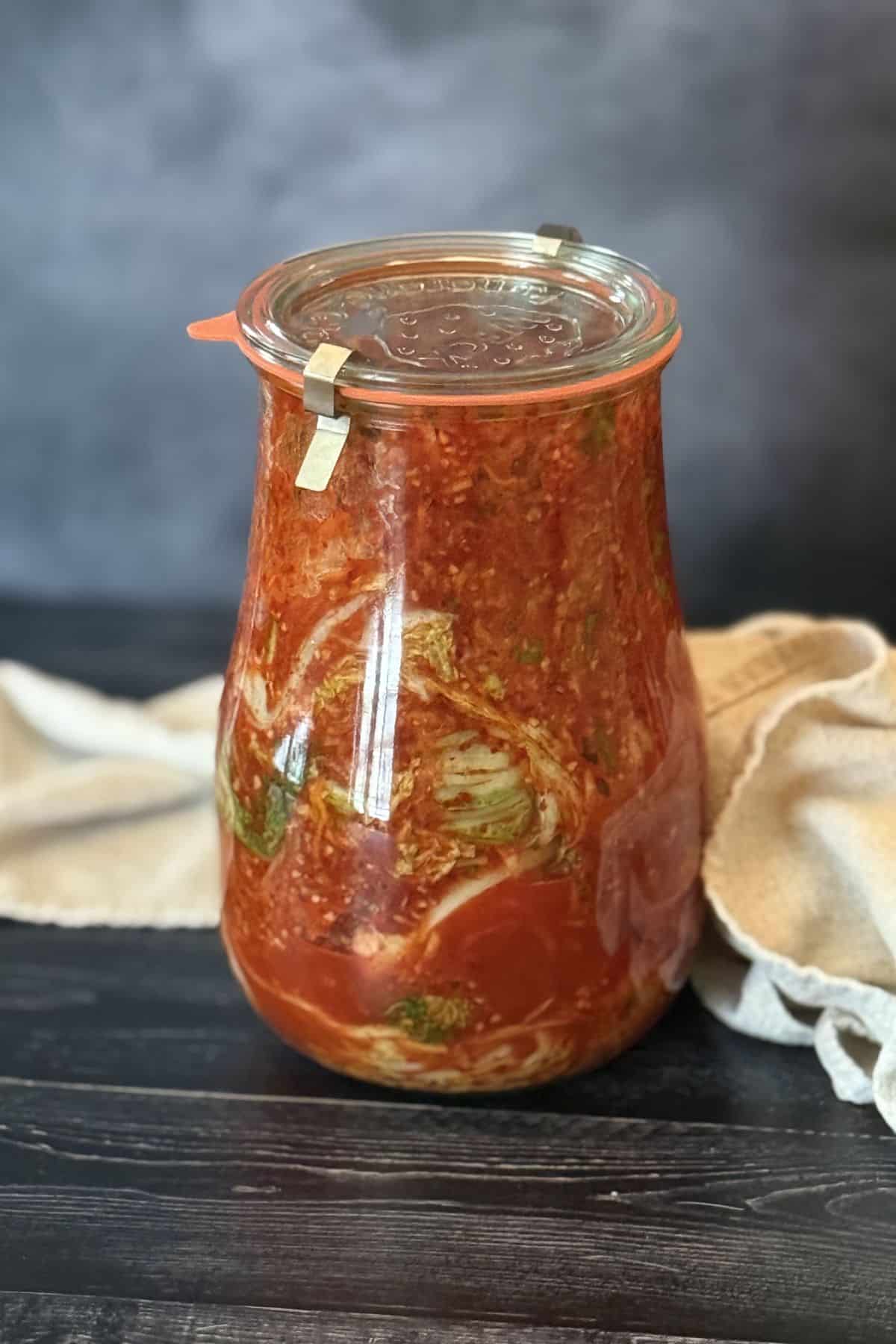
There’s something deeply satisfying about taking a pile of cabbage and turning it into something alive.
Kimchi isn’t so much a recipe as it is a process. Salt, time, heat, and patience working together to create something bold, sour, spicy, and full of life. It’s one of those foods that feels a little wild in the absolute best way.
And despite what people think, you don’t need anything fancy to make it.
No special tools. No perfect technique. Just good ingredients and a willingness to let things sit and do their thing for a bit.
If you’ve got a head of napa cabbage, some salt, and a little curiosity, you’re already halfway there.
What is Kimchi?
Kimchi is a traditional Korean fermented vegetable dish, most commonly made with napa cabbage, salt, garlic, ginger, and chili.
Through fermentation, naturally occurring bacteria transform the vegetables into something tangy, complex, and packed with beneficial probiotics.
It’s been made for generations, not because it’s trendy, but because it works (and it's freaking delicious).
What You Need to Make Kimchi at Home
Large Head Napa Cabbage
Salt
Vegetable mix:
- Garlic
- Fresh Ginger
- Daikon Radish
- Carrot
Seasoning:
- Gochugaru (Korean Chili Flakes)
- Sugar
- Fish Sauce
How to Make Kimchi
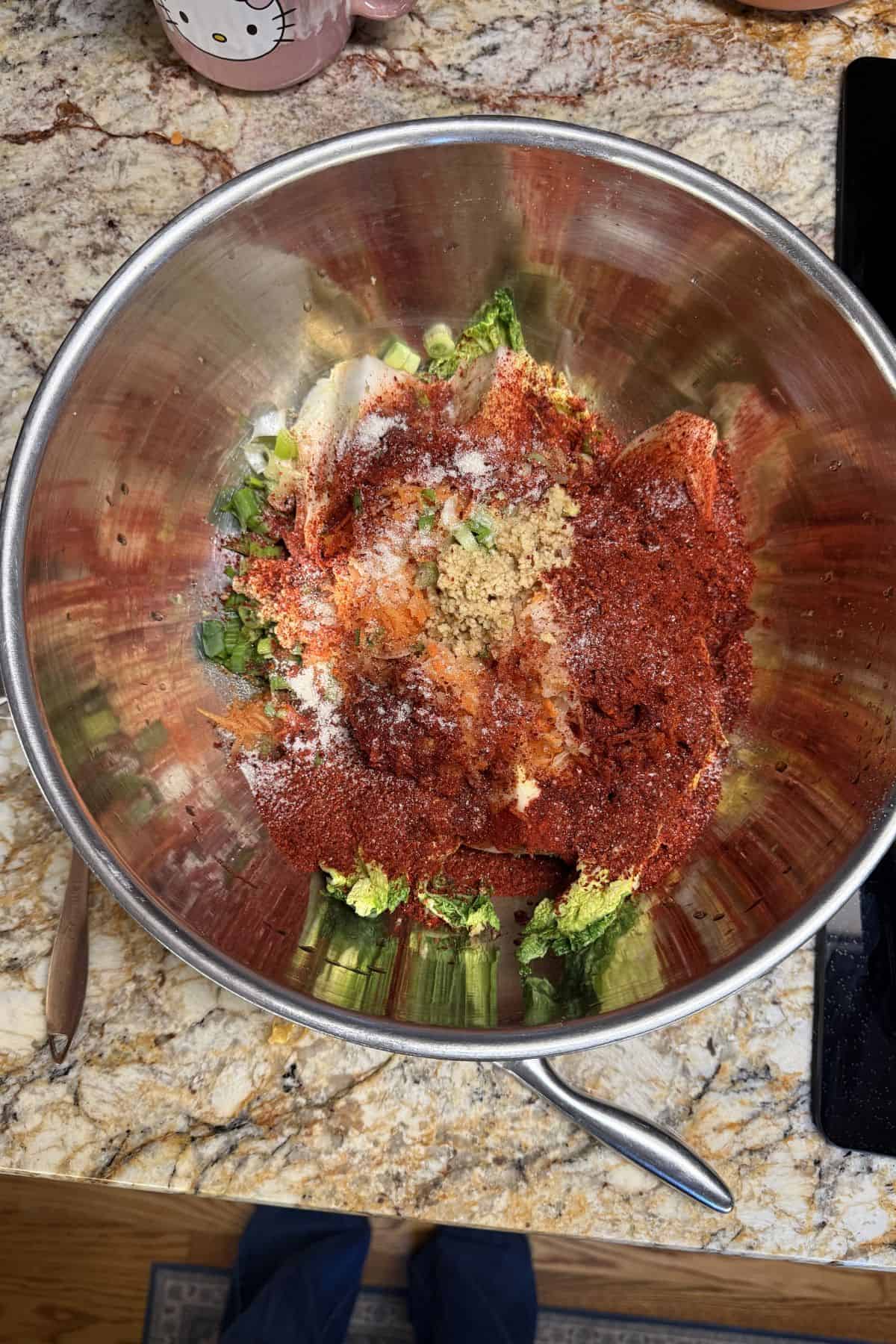
Prep the cabbage. Rinse and quarter the cabbage, keeping the core intact. Pull the leaves apart slightly and generously salt between each layer.
Place the salted quarters in a large bowl and let sit for 2-8 hours, until softened.
You’ll know it’s ready when the cabbage is soft and bendy, not crisp.
Rinse well (seriously... unless you want salt overload), then squeeze out excess water.
Make the kimchi mix. Julienne the carrots and radish (a food processor works great here). Mince the garlic, grate the ginger, and combine everything in a large bowl with the gochugaru, sugar, and fish sauce.
Using gloves, mix well by hand. Add the rinsed cabbage and toss until fully coated.
It should look messy, red, and alive.
Pack and ferment. Pack tightly into a jar (Weck tulip jars are perfect for this). Press down until the liquid rises above the vegetables, leaving a little space at the top.
Loosely cover and let sit at room temperature for 1-2 days.
Then transfer to the refrigerator to slow fermentation. Let it continue to ferment for at least 3 more days before eating.
To store: Transfer a smaller portion into a separate jar for everyday use while the main batch continues to deepen in flavor.
What Kimchi Should Taste Like
Day 1: Fresh and spicy. Good, but not at its peak yet.
Day 4: Tangy, deeper, more complex. This is where it starts to shine.
If it smells sour and alive, you did it perfectly.
How to Use Kimchi
Kimchi is way more versatile than people think.
- Eat it straight (honestly, the best way)
- Add to fried rice (next level)
- Layer into grilled cheese (lowkey incredible)
- Chop into eggs (so good)
- Toss into soup (surprisingly perfect)
Kimchi makes everything better.
This is the kind of food that reminds you not everything needs to be controlled. You don’t force it. You don’t rush it. You just set it up… and let it become something else.
FAQs for Homemade Kimchi
Do I need rice flour to make kimchi?
No. It helps thicken the paste, but your kimchi will ferment just fine without it.
Can I make kimchi without fish sauce?
Yes. You can skip it or substitute soy sauce for a vegetarian version.
How long does homemade kimchi last?
Several weeks in the refrigerator. The flavor will continue to develop over time.
More Fermented & Cultured Recipes
- How to Make Sauerkraut (Simple Fermented Cabbage)
- How to Make Fermented Hot Sauce
- Fermented Garlic Honey (immune gold)
📖 Recipe

Homemade Napa Cabbage Kimchi
Bold, spicy, and alive, this homemade kimchi transforms simple napa cabbage into a tangy, fermented staple packed with flavor. This easy kimchi recipe uses traditional ingredients and a simple process to create a deeply complex, probiotic-rich food right in your own kitchen.
Ingredients
- 1 Large Napa Cabbage
- ¼ Cup Salt
- 1 Cup Daikon Radish , julienned
- ½ Cup Carrots , julienned
- 6 Cloves Garlic , minced
- 1 teaspoon Fresh Ginger , grated
- ¼ Cup Gochugaru (Korean chili flakes)
- 2 Tablespoons Fish Sauce
- 2 teaspoons Sugar
Instructions
- Prep the cabbage:Quarter cabbage, keeping the core intact. Salt between layers and let sit 2–8 hours until softened. Rinse well and squeeze out excess water.
- Make the kimchi mix: Combine garlic, ginger, carrot, radish, gochugaru, sugar, and fish sauce. Mix well.
- Combine: Add cabbage and massage until evenly coated.
- Pack: Pack tightly into a jar, pressing down until liquid covers the vegetables. Leave space at the top.
- Ferment: Cover loosely and let sit at room temperature 1–2 days. Transfer to fridge and ferment at least 3 more days before eating.
Notes
Nutrition Information:
Yield:
10Serving Size:
1Amount Per Serving: Calories: 16Total Fat: 0gSaturated Fat: 0gUnsaturated Fat: 0gSodium: 2632mgCarbohydrates: 4gFiber: 1gSugar: 2gProtein: 1g
Nutrition information is provided as a courtesy and is an estimate only. Values may vary based on ingredients, brands, and preparation methods and should not be considered a substitute for professional advice.



Leave a Reply