
Ducks are fairly easy to care for even in the cold months of the year. They don't really mind the cold, so caring for ducks in winter is pretty straightforward.
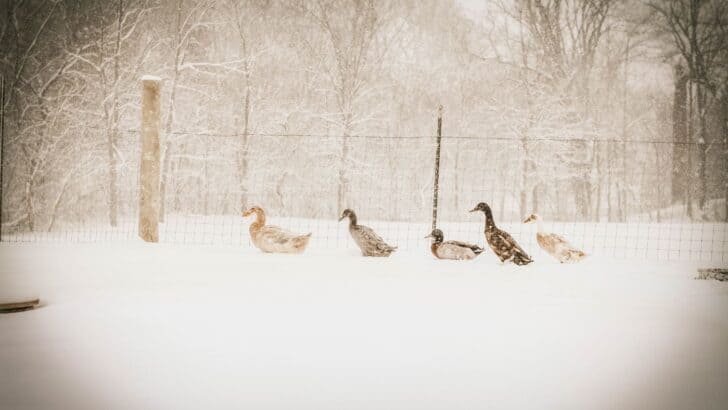
Domestic ducks are a lot of fun and something I believe all homesteaders should venture into keeping ducks at some point along their homesteading journey. They're messy, yes, but they're hardy birds that don't have the same issues that can oftentimes plague laying hens.
In the summer, ducks really just need a pool or pond and nourishing food and they're good to go. While we do choose to coop up our ducks year-round to protect them from predators, many folks choose to leave their ducks outdoors all summer long to free-range. That's a personal decision.
Caring for ducks in the winter is still pretty easy and not nearly as involved as caring for chickens in the winter, but it still requires some thought and consideration. Let's learn a few facts about ducks so we can properly care for them when the cold weather hits.
Winter Duck Care
It's worth noting that adult ducks are pretty well-equipped to withstand the harsh, winter elements. Where chickens begin to feel old man winter's chill around 45°F, ducks can comfortably exist down to around 20°F.
Even if they're soaking wet, ducks stay warm. Wild ducks and domestic ducks are both equipped not only with a double layer of waterproof feathers on top of a nice, warm downy layer but also have a nice dense layer of fat beneath all of those feathers and down to keep their body temperature a toasty 106°F to 108°F.
Also, unlike chickens, ducks do not have wattles and combs that are prone to frostbite. In fact, the only exposed areas ducks have are their feet. And they're equipped to handle the cold even in those exposed areas.
Ducks have a special counter-current heat exchange system. The cold blood from their feet is met with the warm blood from their bodies and warmed up through their vessel system. This means that their feet are kept just above freezing to keep the blood moving and the cold blood never reaches their warm body.
But, all of this doesn't mean they can't use a little help from you. When that mercury drops below 20°F, as it often does here in northern Indiana, they'll appreciate your assistance.
Water for Ducks in the Winter
Ducks need fresh water. They utilize it to help them swallow and digest their food, so it's an absolute necessity for their survival. But, this doesn't mean they need a fancy pond, pool, or body of water to keep them happy.
In fact, it's not necessarily a good idea to provide those things in the winter. Especially if you live in an area that gets below freezing for extended periods of time or has extreme wind chills.
Why? Because waterfowl are waterfowl and if they find any water they can get in, they will play in it. Which is a terrible idea. Those nice sunny days with low temperatures that make it look nice, ducks will get into the water, then they'll hope out and lay down to warm those feet and, they will freeze to the frozen ground.
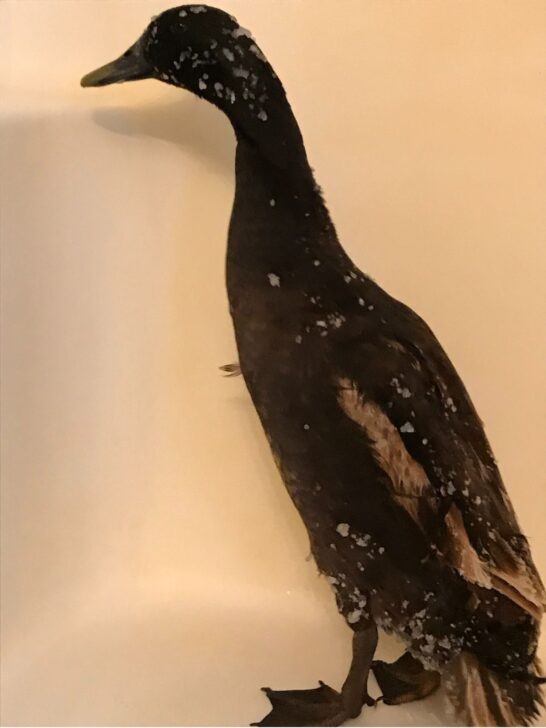
No one wants to see a duck frozen to the ground. If your duck experiences the unfortunate event, hopefully, you're around to notice. You can take some hot water, pour it around the duck while gently pulling, and "peel" them off the ground. Bring them indoors for just a tad bit of time to warm slightly, and place them back in the coop or duck house.
Instead of utilizing pools, we use rubber buckets with heaters in them. Heated buckets work equally well. You want something that they can dip their bills and heads all the way in, but not something they can swim in or splash around in. So, buckets work well.
Keep this bucket outdoors, not in the coop. We keep all food outdoors for our mixed flock and all water. If you put water in the coop at night, they're just going to make a massive mess and create a lot of moisture inside the coop. Moisture is a problem for all animals, so it's best to avoid it.
Whether you use a water bowl, a water bucket, or something else entirely, keep their water source outside as well as their food so you won't have mice or moisture problems inside the coop.
Feeding Ducks in the Winter
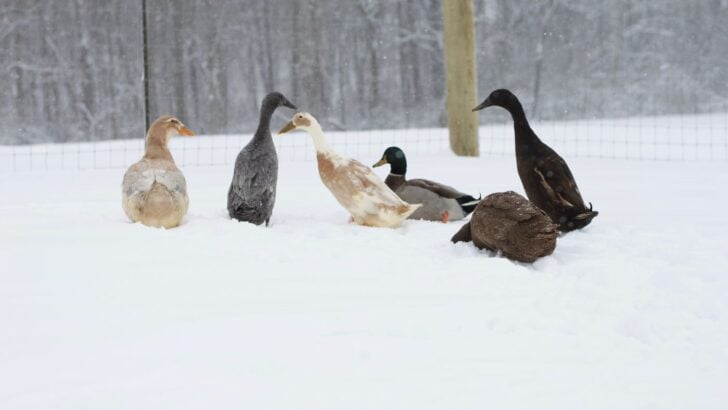
Like I mentioned, we keep all food outdoors. This helps maintain the rodent population and keeps them out of our coop. Also, since we don't put water inside the coop, food would be a bad idea... they need the water to properly swallow and digest their food.
The main diet of ducks should always be quality layer feed of some sort. Whole grain feed is amazing, but quality layer pellets will also do the job.
That being said, you can supplement their feed a bit to help maintain their warmth on those very cold days. Kind of the same idea as caring for chickens in the winter.
We like to give our ducks peanuts, organic cracked corn, or scratch grains in the evenings in the winter for a little extra protein. These foods take a little longer to digest and help them stay warm overnight.
Other treats that you can give ducks would be fodder, warm, cooked oatmeal, grubs, or thawed peas from your summer harvest out of the freezer.
Housing Needs for Ducks in the Winter
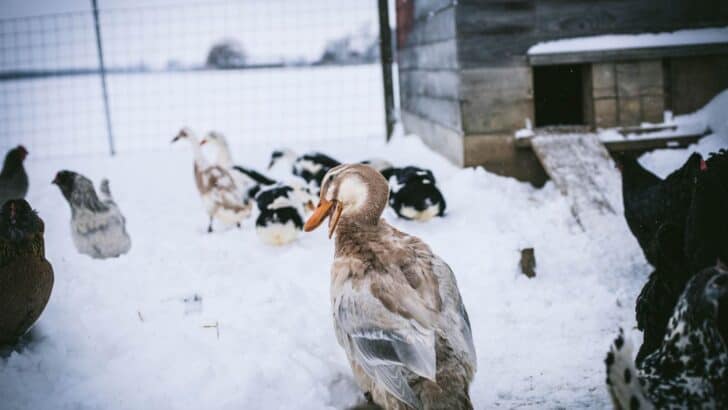
Ducks are perfectly happy trudging along in the snow on some of the coldest days of winter. They'll dig along in the snow with their bills and be perfectly content, unlike their chicken friends who'd rather stay in the chicken coop all day long.
That being said, they still need a safe, predator-proof, warm place to get out of the elements. While ducks do enjoy nesting on the ground, we have a raised coop where we house all of our mixed flock together.
Ducks need a minimum of 2 square feet per bird if they have regular access to fresh air, if they're going to be cooped up more often than not, you'll want to provide them with 4 to 5 square feet each to keep them comfortable.
Placing a layer of straw on the floor of the coop or some extra straw on the ground of a duck house that they can nest in will keep them happy birds. On very windy days with extremely cold temperatures, our ducks are inside a good deal of the time. The straw acts as a great insulator to help them stay warm and they enjoy nesting in it.

We also place straw in the run and replenish it a few times over the winter. This seems to make the birds more comfortable and also helps during the spring melt when mud season begins full force.
Contrary to popular belief, ducks nor chickens need a heat lamp in the winter. Not only are they completely unnecessary, but they're also a fire risk. The birds will be just fine with a roof over their heads and protection from howling winds. They have enough natural body heat and defenses to keep them warm.
Ducks don't require a lot of fuss in the winter, or any time of year really. But these tips will help your ducks stay happy and healthy and they'll appreciate the little bit of TLC to keep them comfortable and safe on those cold winter days.
Other Duck Posts You'll Like:




Kimberly says
This is one of the most informative articles I’ve read on ducks in the winter. THANK YOU. We were “blessed” hahaha with 2 domestic ducks someone dumped in our neighborhood. Our HOA doesn’t permit domestic ducks but they hang out in the neighborhood lake. Last winter (Kentucky) was brutal with that arctic period so they lived in our garage until the lake unfroze. We can’t build any protection for them at the lake so any suggestions on trying to keep them safe from the snow/wind would be most appreciated….without storing them in our garage. Thank you, again!
Danielle McCoy says
You could try a dogloo, dog house, or something similar that you could train them to so they could stay out of the wind maybe? I'm not sure what else you could do since you aren't able to "keep" them but something like that would give them some way to stay out of the wind.