
For months, I've been picking up books and setting them back down again.

Some weren't bad. A few were even objectively good. But every time I opened one, I found myself drifting. I'd read a chapter, maybe two, and then reach for my phone or start another project instead. The excitement I used to feel about reading had quietly slipped away.
As someone who has always loved books, that felt strangely unsettling. I've been a bookworm for as long as I can remember, always intrigued, always picking up a new book, always sneaking in an extra chapter wherever I can.
I tried book after book, then I picked up Slewfoot by Brom.
I expected a witchy historical horror novel. What I didn't expect was for it to remind me why I love reading in the first place.
A Story That Felt Like Walking Into the Woods

From the first few chapters, Slewfoot felt different.
The atmosphere is thick with dark forests, superstition, isolation, and the kind of unease that lingers just beneath the surface. It isn't fast-paced in the way many modern thrillers are. Instead, it pulls you deeper with every page until you realize you're completely lost inside the story.
I stopped checking how many pages were left in the chapter. I stopped reaching for my phone. I stopped looking for something—anything—else to occupy my time.
Instead, I started staying up later than I should have, sneaking in a chapter on my lunch break, and finding any excuse I could to return to the woods Brom had created.
Because the truth is, the horror in Slewfoot isn't the monsters or the things that go bump in the night.
It's the way Abitha is treated.
It's watching a woman be judged, dismissed, controlled, blamed, and forced into a role she never asked for. The supernatural elements may drive the story forward, but the real horror is far more familiar.
And maybe that's why it hit so hard.
A Forest I didn't Want to Leave
Some books tell a story. Others create a place. Slewfoot did both.
I could see the dark Connecticut woods. The isolated cabin. The creeping shadows between the trees. The mud, the cold, the silence. Every page felt damp with rain and heavy with the weight of something watching from just beyond the edge of the forest.
The setting wasn't simply a backdrop, it felt alive.
Maybe that's why the story pulled me in so completely. The world Brom created felt tangible enough to step into. I wasn't reading about the woods. I was wandering through them.
Long after I closed the book, I could still picture them.
More Than Folk Horror
While Slewfoot is often described as folk horror, what stayed with me most wasn't the horror.
It was Abitha.
Without spoiling anything, Abitha begins the story constrained by the expectations of the people around her. She is judged, dismissed, controlled, and blamed. Watching her transformation throughout the novel felt less like reading a character arc and more like watching a slow-burning rebellion.
There is rage in this story. Not loud or reckless... just the kind that simmers for years before finally deciding it has had enough and doing something about it... giving the supporting characters precisely what they asked for.
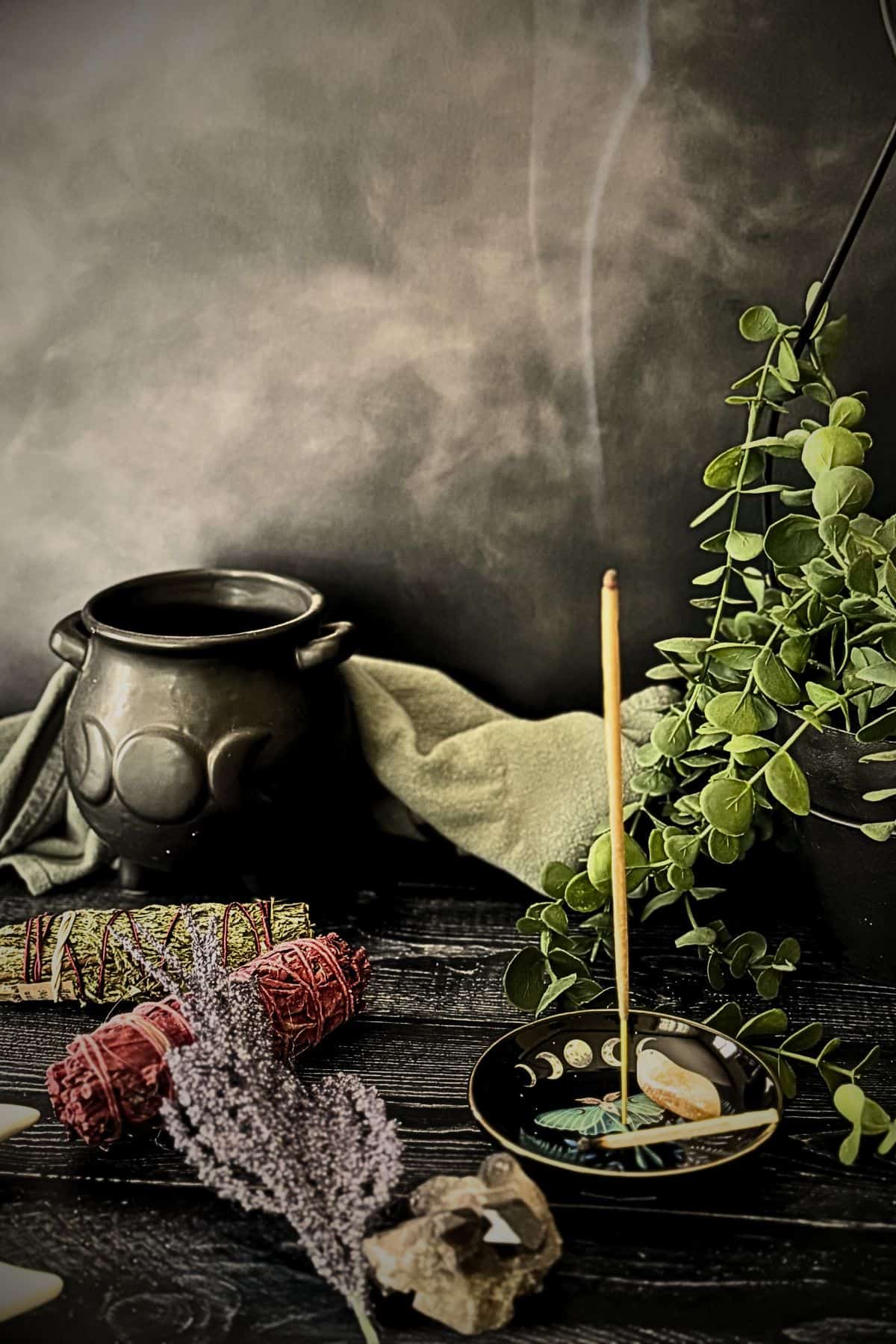
The Witch Was Never the Monster
Before I picked up Slewfoot, I kept seeing the same criticisms.
The plot is weak. The characters are annoying. Nothing happens.
After finishing it, I couldn't help but wonder if some of us had read entirely different books.
Because what I found wasn't a weak plot. It was a slow-burning story about power, fear, control, and what happens when a woman finally stops asking for permission to exist.
Brom doesn't romanticize seventeenth-century Puritan life. He drags you straight into it. The isolation. The suspicion. The rigid expectations placed on women. The way a woman could be blamed, judged, controlled, or condemned simply for refusing to fit neatly into the role assigned to her.
For me, the horror wasn't lurking in the woods, it was realizing how familiar some of it still felt.
Abitha's story resonated because women are still taught many of the same lessons, just dressed in modern clothing. Be agreeable. Be accommodating. Be quiet. Be pleasant. Don't be difficult. Don't take up too much space.
And Slewfoot asks a dangerous question:
What happens when she decides she's had enough?
Not because she becomes cruel or evil. But because she finally stops shrinking herself to make other people comfortable.
That's what stayed with me long after I finished the book.
Not the monsters or the witchcraft. The reminder that there is a difference between being kind and being obedient.
Why It Worked When Nothing Else Did
Part of what broke my reading slump was timing. I picked up Slewfoot at exactly the right moment.
I had seen it mentioned several times, read a few reviews and couldn't decide if it was for me or not... then, I decided it was time to take a chance and check it out.
I was tired of books that felt manufactured. Tired of stories that seemed more concerned with trends than atmosphere. Tired of characters I forgot the moment I closed the cover.
Slewfoot felt alive.
It was strange, immersive, beautiful, and a little dangerous. The kind of story that doesn't feel written so much as discovered.
The plot wasn't chasing a trend. The characters felt like people rather than archetypes. Even the world itself felt tangible, as though it existed just beyond the edge of the forest waiting to be stumbled upon.
Most importantly, it made me want to keep reading.
The Book That Reminded Me Why I Love Reading
When I finished the final page, I wasn't thinking about ratings.
I was thinking about how much I had missed getting lost inside a story.
The kind of story that follows you into the kitchen while you're making coffee. The kind that lingers in your thoughts while you're driving to work. The kind that makes you immediately start looking for the next book that might make you feel the same way.
For me, Slewfoot wasn't just a great read. It was the book that reminded me why I love reading at all.
And after months of abandoned books and half-finished chapters, that might have been exactly what I needed.
I think what ultimately made Slewfoot work for me was that it trusted its readers. It wasn't rushing to get to the next twist. It wasn't trying to become the next viral sensation. It simply told the story it wanted to tell and allowed the atmosphere, characters, and tension to do the work.
In a world full of books that often feel engineered to capture attention, Slewfoot felt content to earn it.
And maybe that's why I couldn't put it down.
I know Slewfoot isn't Brom's most famous work, and I know it won't be for everyone. Readers looking for relentless pacing and constant twists may find it too slow.
But for readers who love atmosphere, immersive settings, unforgettable characters, and stories that linger long after the final page, I think there's a good chance it will get under your skin the way it got under mine.
Who Should Read Slewfoot?
- Readers who love folk horror
- Fans of atmospheric historical fiction
- Anyone who loved the film The Witch
- Readers drawn to stories about feminine rage and transformation
- Anyone looking for a dark, immersive read that lingers long after the final page
Read Slewfoot
If you're looking for an atmospheric folk horror novel filled with dark forests, superstition, feminine rage, and one of the most memorable reading experiences I've had in years, Slewfoot is well worth picking up.

Leave a Reply