
This easy, homemade seed starting mix only contains 3 ingredients so you can save money and start your garden on a shoestring budget.
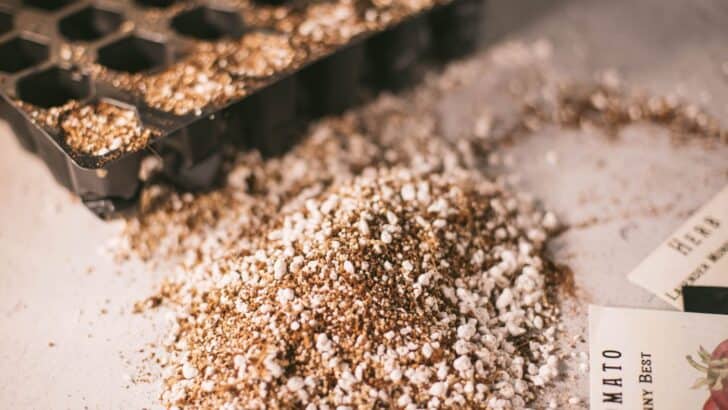
Since part of the reason we homestead is to try to save money on real, whole foods, it makes sense we would try to save money on actually growing our own food. So, we grow from seed, save seeds, use DIY seed starters with recycled stuff from home, and now we even make our own seed starting mix.
Because... that stuff you buy at the store? It is expensive. Sure, it doesn't seem too bad at first glance. But when you're starting hundreds of seeds a year, 8 quarts doesn't get you very far. Making your own is far more economical and avoids unnecessary contents.
What is seed starting mix?
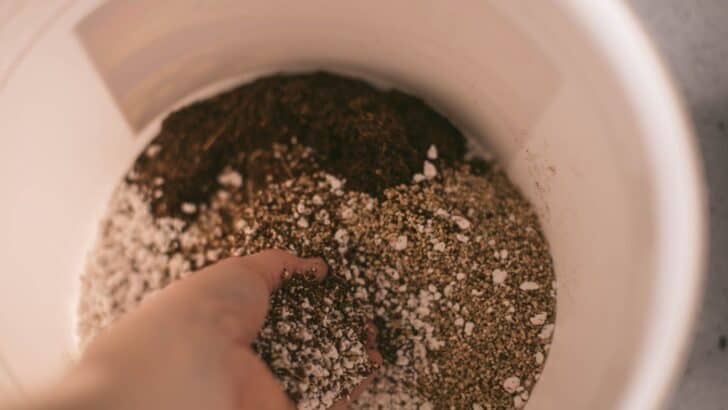
Seed starting mix is a soilless compound made up of light, grainy materials to promote the growth of seeds without getting compacted.
You read that right... it does not contain any soil. No compost or fertilizer is necessary either. Only three simple ingredients that you mix together and you've got a nice, light starting mix to put your seeds in.
Why doesn't it contain soil? Because much like baby chicks, seeds don't need additional nutrients, the nutrients are right in the seed (just like a day-old chick feeds off the yolk).
This is why you can test seeds for germination with just a bit of water and a paper towel. No nutrients are needed for the first couple of weeks, in fact. Just a soilless compound, good old H2O, and some light (after it's sprouted).
Seed starting mix really only needs three simple ingredients, perlite, and vermiculite; to provide aeration, and coconut coir to retain water. See? No soil.
What is the difference between potting soil and seed starting mix?
Potting soil typically contains soil and/or compost, is denser in texture, usually contains fertilizer, and will compact and weigh down tender seeds inhibiting root sprout.
Seed starting mix doesn't contain soil of any kind or compost, it's lightweight and promotes seedling growth by not compacting and weighing down the seeds and their roots.
Is seed starting mix necessary?
A lot of folks successfully start seeds in potting soil and it works just fine. The problem with potting soil is the results aren't always as good as a soilless mix. They also tend to promote mold and fungal growth more than their soilless counterparts.
Since we start hundreds of seeds indoors, I opt for making a seed starting mix for them. It results in more reliable germination and fewer problems with fungal and mold issues. It's also much cheaper than potting soil (whether I'm making it or buying it) because it doesn't need any soil or compost.
What is the best seed starting mix?
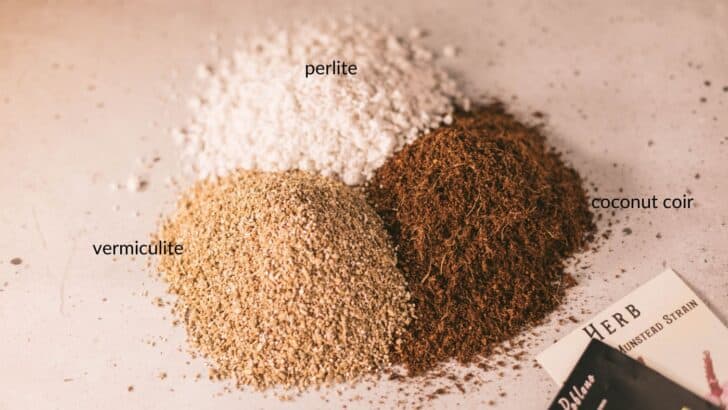
The best mix will drain well, but also hold onto enough moisture to keep your seeds happy and you really only need three ingredients!
Coconut coir- this sterile medium is made up of everything between the shell and outer coating of the seed of a coconut. It is a fine fiber and retains water very well.
Perlite- is a lightweight volcanic glass that looks like bits of styrofoam. This medium provides the mix with aeration and drainage.
Vermiculite- is made of compressed dry flakes of minerals and closely resembles mica. This medium helps rehydration when you water it again as it is quite spongy.
Bags of these are pretty easy to find year-round at your local garden center or farm store and fairly inexpensive. An 8-quart bag of each here in Indiana was less than an 8-quart bag of seed starting mix.
Homemade Seed Starting Mix Recipe
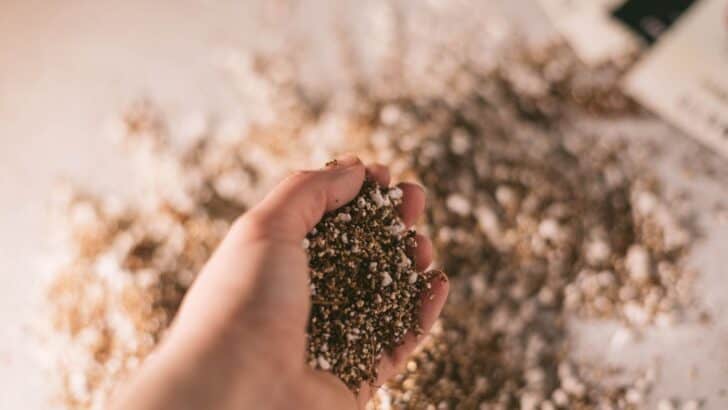
- 1 Part Coconut Coir
- 1 Part Perlite
- 1 Part Vermiculite
A part is any standard measurement you choose whether it be a cup, or a scoop... just keep it the same throughout and you're golden.
Simply put all of the ingredients together in a large bucket, mix them, and then wet the mix with as much water as it will absorb (which will be quite a bit).
By pre-wetting the mixture before you put it into your seedling trays, it will be uniformly moist and easier to keep watered because if it's dry when you begin, it will often have difficulty absorbing the water in those tiny cells and things begin to float.
After you have everything wetted down, you can fill your trays with the mix, pop your seeds in, cover them with a bit of vermiculite if they need it (your seed packets will tell you), and wait on those sprouts to happen.
You can save any extra for next year, no problem. Just make sure you wet it all down before you use it again and I would let it dry before you close it up.
Other Seed Starting Posts You'll Love:


Leave a Reply